


NOMAD L-135ah LifePo4 with Prismatic cell technology and Bluetooth
$1,899.00
Nomad L-135 (RRP 1899.00)
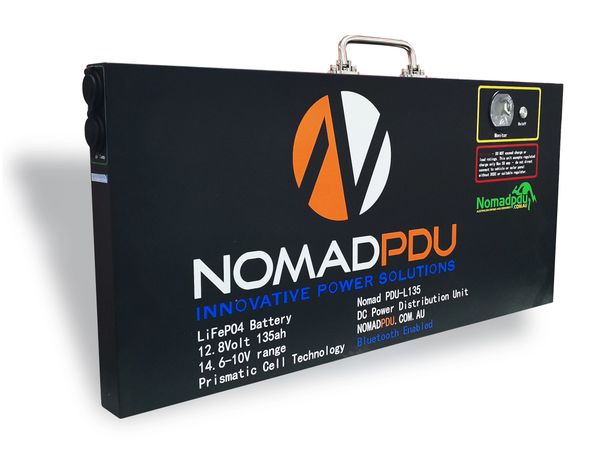
The Nomad L-135 ah Super Slim 738*48*350 3 year Manufacturer Warranty
- The L-135ah LifePo4 with Prismatic cell technology and Bluetooth is one of the thinnest Batteries available in the market ..17kg aprox. and 48mm Thick
- Bluetooth enabled for smart phones
- Complete SOC State of charge screen with full sophisticated diagnostics.
- Maximum Regulated input of 50amp Anderson Style
- Maximum output at anytime 50amp Anderson Style
- Fast Charge USB-C .
- 2 Ciga Sockets (10amp) each. one end
- 1 Anderson Style 50amp output / 50amp Input and Fast USB other end , Anderson style input and output.
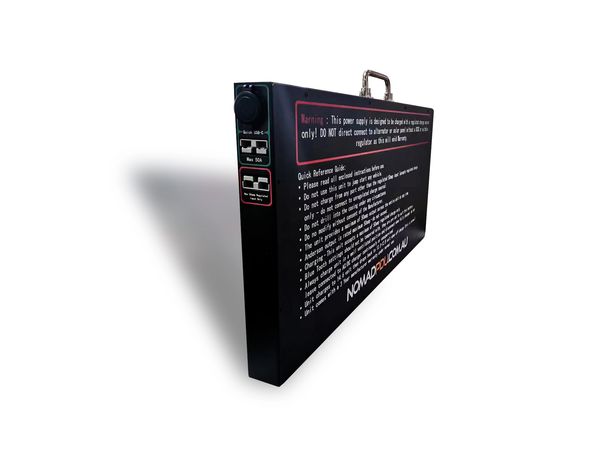
Thinner Profile for adaptation into smaller spaces
There are 2xciga sockets on one end, then on the other end is the Anderson style input and output plus Fast USB-C. All on the end plate allowing for corner and canopy installs, horizontal or vertical applications. Connect to independent distribution board
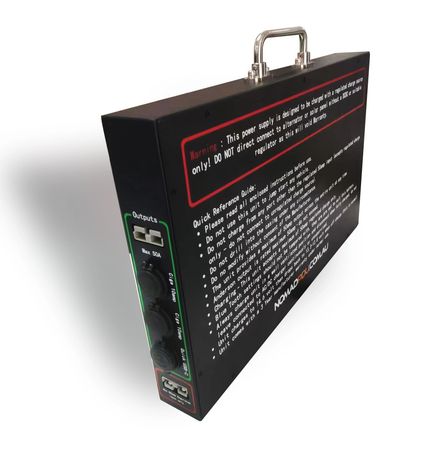
Quick Reference Guide
Securely printed on the back with all associated and relevant instructions, warnings and cautions.
Know before you buy
Before you buy a battery set-up
A second battery runs your fridge, lights and charging without touching the starting battery. Modern vehicles and lithium batteries change how that system should be built.
- Smart alternators
Many late-model vehicles have smart alternators that vary their voltage. A simple isolator doesn't charge a second battery well from these, so a DC-DC charger is recommended (Redarc).
- Where lithium can go
Lithium batteries must not go in the engine bay: the heat is too much (Redarc, Enerdrive). They go in the cabin, tub or canopy.
- Charge it correctly
Lithium needs a charger with a lithium profile, and most can't be charged below 0 C unless the battery is heated. Don't mix battery brands or sizes in one system (Redarc).
- Sizing solar
Work out how many watt-hours you use a day and divide by 5 to 6 sun hours to size your panels. A panel laid flat can lose up to 38% of its output (Enerdrive).
Common questions
Do I need a DC-DC charger?
If your vehicle has a smart alternator, yes: isolators charge poorly from them. A DC-DC charger also gives the second battery the right charging profile, including for lithium (Redarc).
Can a lithium battery go under the bonnet?
No. Battery makers say lithium batteries can't handle engine bay heat and must not be installed there (Redarc, Enerdrive).
Lithium or AGM?
Lithium needs a charger with a lithium profile, a location out of the engine bay and, below 0 C, a heated battery to charge. Compare usable capacity and weight on each battery's specifications, and follow its maker's mounting guidance.
How much solar do I need for a fridge?
Add up your daily use in watt-hours, then divide by 5 to 6 sun hours (Redarc). Allow extra if the panel will lie flat or sit in shade.
Can I run my fridge off the starting battery?
You can, but you risk a flat battery and no start. A second battery with a DC-DC charger keeps the starting battery for the engine.